
Application Note
Expand Residual Solvent Analysis Beyond the Limits of Conventional Gas Chromatography
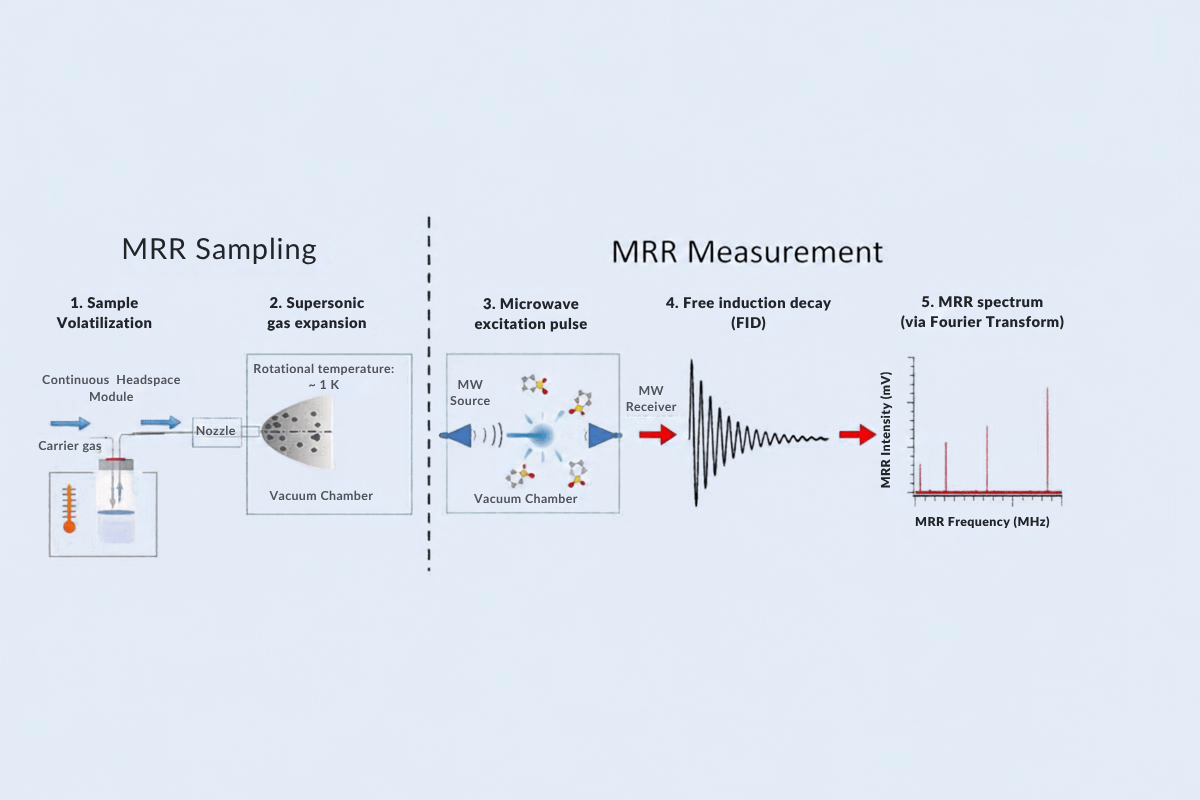
This application note demonstrates how molecular rotational resonance (MRR) spectroscopy enables direct analysis of residual solvents across a broad range of pharmaceutical manufacturing workflows. Using USP Class 2 residual solvents as examples, MRR delivers highly selective identification and quantitation without chromatographic separation while supporting analysis of challenging low-volatility solvents that are difficult to measure using conventional headspace gas chromatography methods.
Application Note Highlights
-
Learn how MRR directly identifies and quantifies residual solvents without chromatographic separation.
-
Explore the analysis of challenging low-volatility solvents, including compounds from USP Class 2 Mixture C.
-
See validation data demonstrating selectivity, linearity, repeatability, and recovery across pharmaceutical matrices.
-
Understand how MRR supports pharmaceutical development, manufacturing, and quality control through streamlined residual solvent analysis.
Download the application note to learn more.
Contact Us
Get in touch to learn more about how BrightSpec can help you revolutionize the structural identification and quantitation of your small molecules.