Frequently Asked Questions
-
How does MRR differ from NMR for structure identification?
MRR identifies molecules by measuring their unique rotational spectra and matching them to predicted molecular fingerprints. NMR relies on interpreting chemical shifts and coupling patterns, which often requires multiple experiments and expert analysis.
-
When is MRR a better choice than NMR?
MRR is especially effective when you need to distinguish closely related compounds, confirm structures quickly, or reduce multi-step workflows. It is particularly useful for isomers and small molecule identification where ambiguity is a challenge.
-
Does MRR replace NMR entirely?
MRR and NMR are complementary techniques. NMR is broadly applicable across many molecule types, while MRR provides highly specific, structure-based identification for small, polar molecules.
-
How does MRR reduce analysis time compared to NMR?
MRR can provide definitive structural identification in a single measurement by directly comparing experimental data to predicted spectra, eliminating the need for iterative testing and interpretation.
Recommended Products

Meet the 
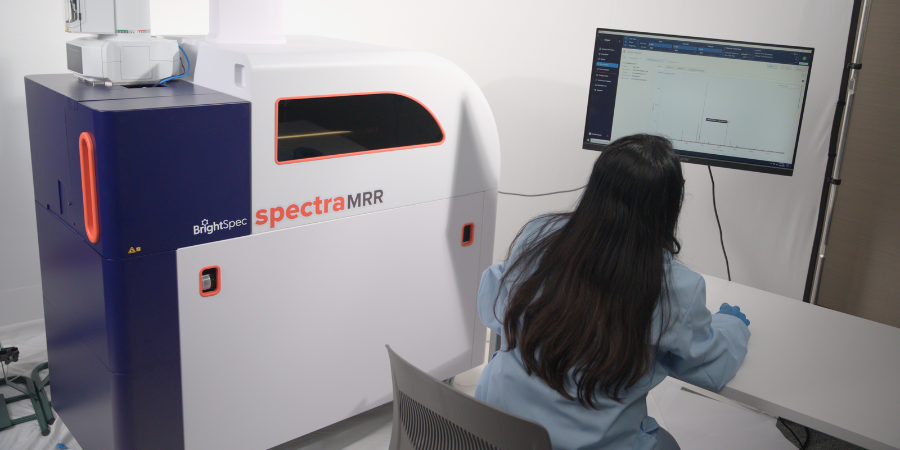
The spectraMRR™ is BrightSpec's most powerful instrument, designed to streamline complex analytical workflows for pharmaceutical chemists.
 Structure Identification Structure Identification |
|
Quantitation |
|
Library Building |
|
Chiral Analysis |

Meet the 
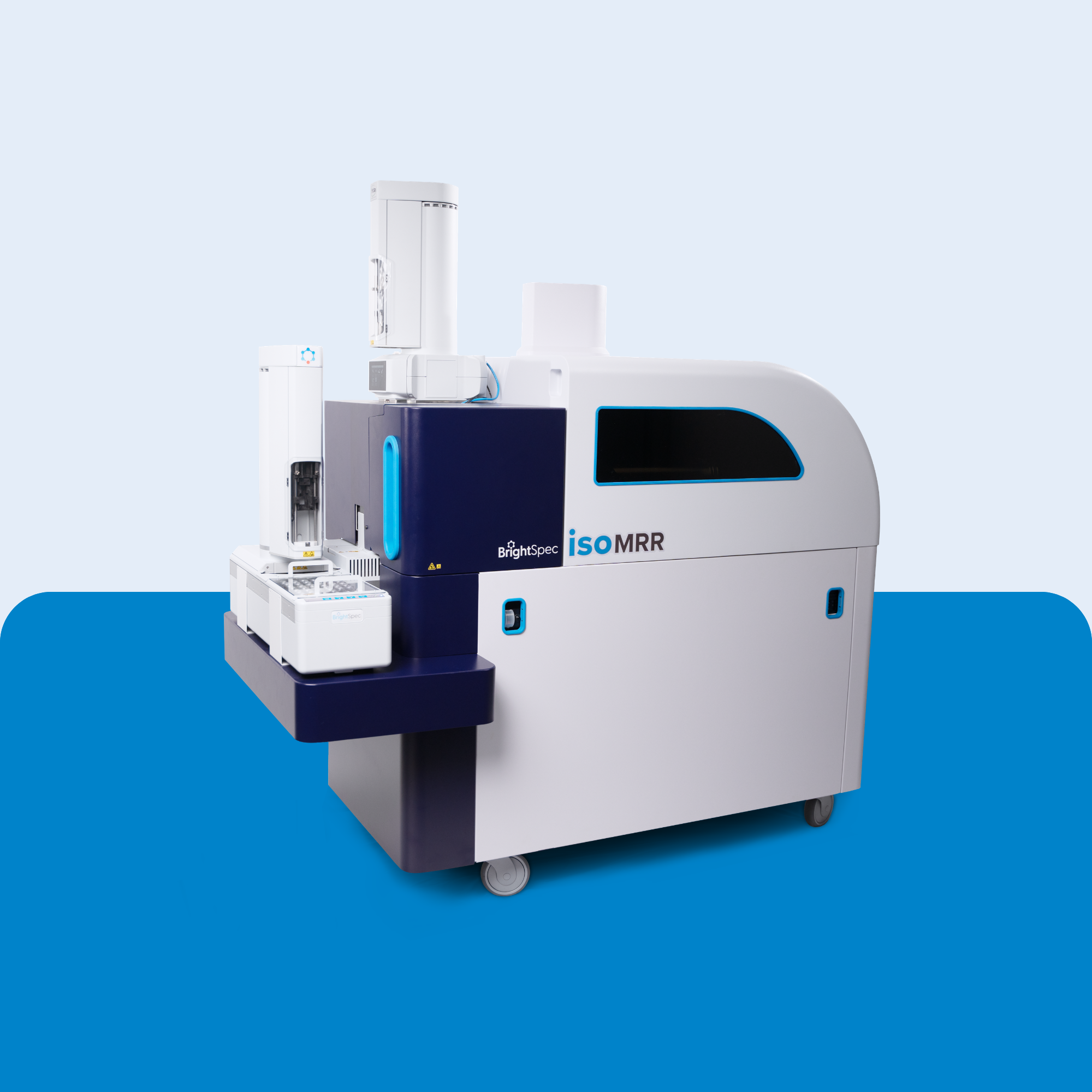
The isoMRR™ is ideal for analytical chemists running routine analysis of challenging analytes in complex mixtures.
|
Quantitation |
|
Access to Pre-Built Reference Library |
|
Chiral Analysis |