Why Use MRR for Structural Identification?
-
Unambiguous Structure Confirmation
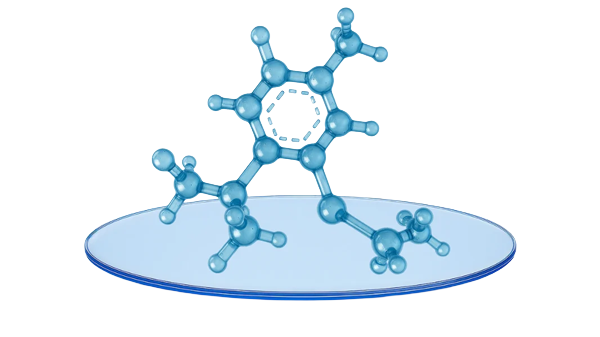
MRR delivers highly specific spectra that uniquely identify 3D molecular structures, including chiral and isomeric forms.
-
Streamlined Analytical Workflows
Simulate, measure, and confirm molecular structures using an intuitive, scalable process powered by MRR and quantum chemistry.
-
Reference-Free Identification
Analyze compounds directly within mixtures without the need for physical reference standards.
Recommended Products

Meet the 
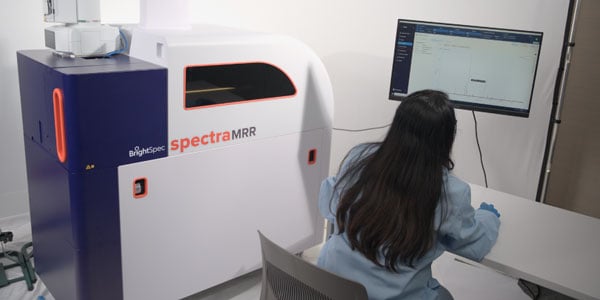
The spectraMRRTM is BrightSpec's most powerful instrument, designed to streamline complex analytical workflows for pharmaceutical chemists.
 Structure Identification Structure Identification |
|
Quantitation |
|
Library Building |
|
Chiral Analysis |


Frequently Asked Questions
-
How does MRR simplify Structural Identification?
MRR enables direct structure determination by measuring a molecule’s unique rotational fingerprint, removing the need for multi-step analysis.
-
How does MRR compare to NMR for structure identification?
MRR provides unambiguous structural identification without requiring extensive interpretation or multiple experiments.
-
What types of structures can MRR identify?
MRR is best suited for small, gas-phase compatible molecules with a dipole moment.