Scientists use a variety of analytical techniques to identify compounds, characterize complex mixtures, and generate molecular information. Comparing analytical technologies can help determine the most effective approach for specific workflows, applications, and analytical goals.
Molecular rotational resonance (MRR) spectroscopy offers a unique approach to structure-specific molecular analysis and complements established techniques such as gas chromatography-mass spectrometry (GC-MS) and nuclear magnetic resonance (NMR).
New to MRR spectroscopy? Learn the fundamentals of molecular rotational resonance technology and how it works.
Evaluate MRR spectroscopy alongside established analytical techniques to better understand their capabilities, workflow considerations, and applications.
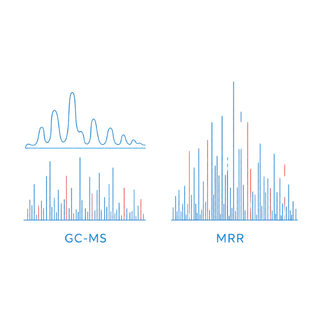
GC-MS vs MRR
Examine the differences between gas chromatography-mass spectrometry and MRR spectroscopy for molecular identification, impurity analysis, and quantitation workflows.
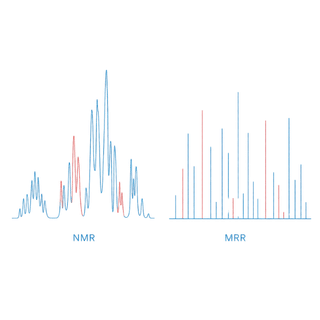
Explore the strengths of nuclear magnetic resonance and MRR spectroscopy for molecular characterization, structural analysis, and workflow requirements.