
Closing the Loop: How MRR Feeds Empirical Data Back Into Generative Chemistry Models

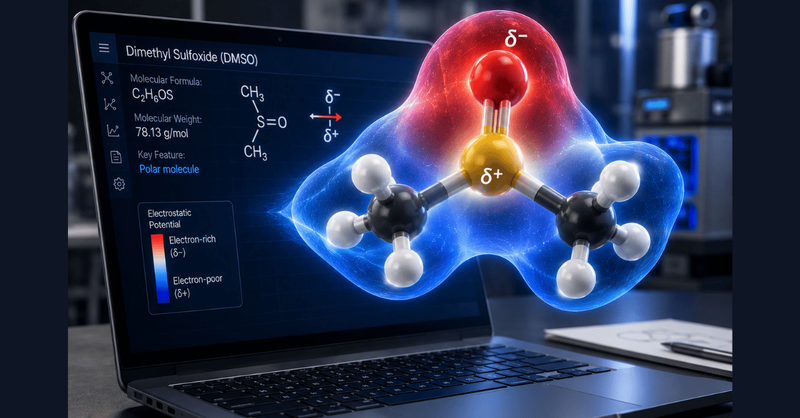
Generative Chemistry has made remarkable strides. Models like reinforcement learning agents, variational autoencoders, and diffusion-based generators can now propose molecules with optimized properties across multiple dimensions: potency, selectivity, ADME, synthetic accessibility.
But there's a gap that persists between the computational and the physical world. A molecule predicted is not a molecule confirmed.
The Current Workflow Has a Blind Spot
Today, most AI-driven discovery pipelines look like this:
- Train a generative model on existing chemical data
- Generate candidate structures with desired properties
- Score and filter candidates using computational predictions
- Synthesize the top candidates
- Validate structure using traditional analytical methods
The problem lives in step five. Traditional methods (NMR, LC-MS, HPLC) work well when you have reference standards or known chemical scaffolds. But they struggle with:
- Novel scaffolds where no reference spectra exist
- Chiral molecules where enantiomer separation is non-trivial
- Trace impurities that mimic or obscure the target signal
The result? Uncertainty propagates backward. The AI model never gets clean feedback on whether its predicted structures match the synthesized products. The training signal is noisy or absent.
MRR as Universal Ground Truth
Molecular Rotational Resonance (MRR) spectroscopy offers a fundamentally different approach to validation. Because MRR determines molecular structure from first principles, based on the unique rotational energy levels of each molecule, it doesn't require any reference material to confirm identity.
Think of it as giving the molecule its own barcode. Every distinct structure (including enantiomers) produces a unique rotational spectrum. If the spectrum of the synthesized product matches the spectrum predicted from the AI's proposed structure, you have unambiguous confirmation. If it doesn't, you know immediately that something went wrong in the synthesis, the prediction, or both.
Closing the Validation Loop
This is where the real opportunity lies. Once MRR validation becomes a routine step in the pipeline, the empirical data can flow back into the model:
- Synthetic accessibility feedback: Which classes of AI-proposed structures survive synthesis? MRR confirms success or failure objectively.
- Structural accuracy feedback: How often does the AI correctly predict 3D conformation and chirality? MRR provides ground truth.
- Impurity profiling: What byproducts are forming, and can the AI learn to avoid them?
Over time, the model improves not just on computational scoring metrics, but on empirical success rates. The loop closes.
What This Enables
Research groups already deploying this combined approach are finding:
- Higher confidence in novel molecule assignments
- Faster iteration between design and validation
- Richer datasets for model retraining (including "failed" predictions, which are often the most informative)
- Reduced reliance on computational spectra that carry their own uncertainties
For groups pushing the boundaries of AI-designed chemistry, whether in drug discovery, materials science, food, flavors, fragrances, or agrochemicals, MRR provides something that has been missing: a reliable, quantitative bridge between the digital molecule and the physical one.